
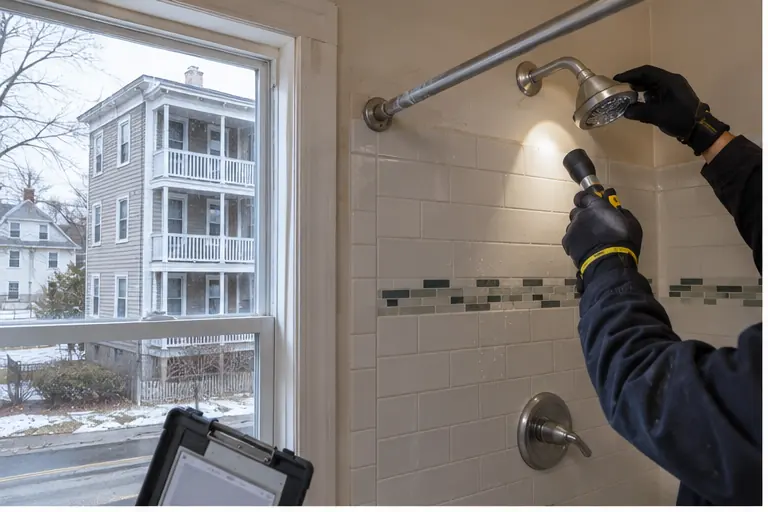
Apartment Leak Detection Chicopee Landlords Depend On
Apartment leak detection in Chicopee locates the source of leaks in three deckers, apartment buildings and condos, including which unit the water is coming from. We test fixtures unit by unit, check shared risers and stacks, and write one clear report the owner, tenants, board and insurer can all use.
Landlords, property managers and condo boards call us when a tenant reports a stain or a bill jumps. We ask about the number of units, where the stain appears and how long it has been growing. Then we quote a range, and arrange entry and tenant notices before the visit so the work goes smoothly.
What Apartment Leak Detection Includes in Chicopee
A multi unit leak is a puzzle with several people involved, and each one sees only part of it. Our visit is organized to solve it in a fair, logical order and to leave each party with the same set of facts, so the discussion moves on to repairs instead of blame.
- A unit access plan, agreed with the owner or board, covering which units to visit, in what order and at what times, with written notice to tenants and a named contact for access
- Fixture by fixture tests in each unit, run one at a time, so we can see which toilet, tub, sink, washer or supply line makes the stain grow
- Riser and stack checks, along with a moisture map across units, to follow water through shared walls, floors and ceilings back to its source, even when it travels a long way
- A report that states the source unit, shows photos and readings, and lists repair options so owners and boards can act quickly and brief their plumber or insurer without a second visit
Why Leaks Are Tricky in Chicopee Multi Families
About 42 percent of Chicopee housing is multi family, so these buildings are a big part of our work. They share pipes and walls, and that sharing makes leaks hard to pin on one place, which is why a careful test beats guessing.
- Stacked bathrooms in three deckers: Bathrooms often sit directly above each other, so a failing drain or supply line on the top floor soaks the ceiling below, and below that, and each tenant sees only their own stain.
- Shared risers and cast iron stacks: Old risers and stacks run through several units, and one cracked joint can wet walls on every floor without any visible puddle, so the damage keeps spreading while owners look in the wrong place.
- Older plaster ceilings: Plaster hides water for weeks, then drops a stain or a patch at once, far from the real source, and an owner may repaint the wrong ceiling.
- Condo rules on who pays: Documents and insurance decide responsibility, and without a clear source, boards and owners argue instead of repairing, while the leak continues to do damage.
- Tenants who notice late: Someone away or busy may not see a stain until it has grown, which makes the damage and the dispute larger and the repair more costly.
How We Handle Apartment Leak Detection Step by Step
We work from the top unit down and keep every party informed along the way. These five steps keep tests quiet, fair and quick, and they end with a source that nobody has to guess about or argue over.
- Talk with the owner or board: We confirm the symptoms, the units and the building history, then agree on timing, access, keys and who will speak with tenants.
- Notify tenants: Tenants receive short notice of the visit, what we will do and how long water may be off, so nobody is surprised at the door and the visit starts on time.
- Test from the top unit down: We run each fixture one at a time, starting above the stain, while watching moisture readings in the unit below, then repeat for each unit in the stack.
- Map the moisture: Meters and thermal imaging trace the wet area across walls and ceilings, showing the path the water took through the building, from the source to the stain.
- Name the source and report: We state the source unit and fixture, document it with photos and readings, and list repair options for the owner or board, so the next step is clear.
Multi Family Leaks We Track Down
Leaks From the Unit Above
The classic complaint. We test every fixture in the unit above until one makes the stain grow, and the culprit is often a tub overflow, a toilet seal or a washer hose.
Shared Riser Leaks
Water supply risers feed several units, and a pinhole in one can wet multiple floors before anyone sees a drip, so we check them when no single fixture explains the stain.
Old Drain Stack Leaks
Old drain stacks crack and seep at joints, often behind finished walls in the kitchens and baths, and the leak shows only when a fixture above is used.
Balcony and Porch Leaks
Porches and balconies on three deckers let water into ceilings below, especially at ledgers, rails and failed flashing, and they leak most after storms.
Common Area and Laundry Room Leaks
Shared laundry rooms and hallways have supply lines, drains and machines that leak into basements and nearby units, and the damage is easy to miss in a space nobody owns.
High Building Water Bills
A bill that jumps for the whole property points to a hidden leak, and we trace it through meter checks and unit tests until the loss is found.
How Much Does Apartment Leak Detection Cost in Chicopee?
Chasing a leak through a multi unit building in Chicopee typically costs about $250 to $650 for a single issue, depending on the units involved. You can phone for an estimate at no cost, and the firm figure is given at the property first.
| Multi family job | Typical range |
|---|---|
| One stain, two units to test | About $250 to $400 |
| Three deckers, several fixtures and risers | About $400 to $550 |
| Larger building with stack checks | About $550 to $650 |
| Late day testing for working tenants | Plus roughly $100 to $250 |
Whether we can enter each unit easily, how many fixtures and units are involved, how hard the stacks are to reach, the hour of the call and the detail of the report all affect the price. We discuss them before booking, so owners and boards can plan the budget and decide who shares the cost. Repair work is quoted separately once the source is named, and any plumber can price it from our report. If an insurance claim is likely, tell us when you book so the photos and readings are taken with that in mind.
Recent Apartment Leak Detection Jobs Near Chicopee
Landlords across Chicopee have had multi family leak investigations from us in recent months, and satisfied landlords were pleased to learn which unit and fixture caused the stain. The photos here come from that work.
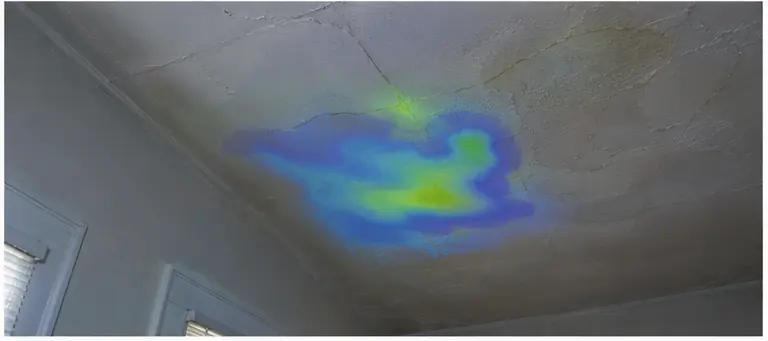
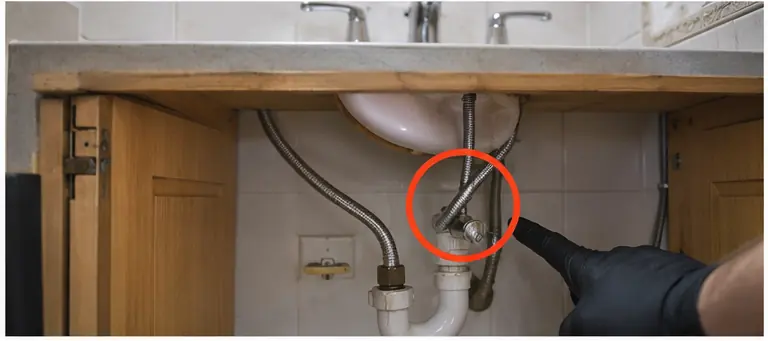
One photo shows a stain pattern, and the other shows the source behind it.
Working With Tenants and Condo Boards
Multi unit jobs involve many people, and a calm, factual approach keeps everyone cooperative. We aim to treat the work as a technical question and leave blame out of it, because that keeps tenants helpful and boards focused on repairs.
- Give tenants written notice of the entry date and the time window
- Run tests quietly, one fixture at a time, and keep noise to a minimum
- Take photos in each unit, with the tenant’s permission, for the record
- Share one report with all parties, so nobody receives a different story
- Use plain, factual language in the report, with no blame or guesses, so it reads well to an adjuster
- Offer simple repair options so the owner or board can decide quickly
- Follow up with the owner or board after the visit to answer questions
Related Leak Services in Chicopee
Multi unit problems often connect to claims and bills, so these related services help owners and boards finish the job properly. If one fits your building, it can join the visit and the same report.
- Insurance leak detection reports for claims on multi family properties, with dated photos and readings
- High water bill checks for buildings with one shared meter and no way to see who uses what
- Hidden leak detection for stains inside walls, floors and ceilings
- Sewer and drain leak detection for stacks, laterals and floor drains, with a camera where needed
Multi Family Help Across the Valley
We test three deckers in Chicopee Center, Willimansett and Ferry Lane, and apartments in Smith Highlands where condo and rental buildings stand side by side. We also serve Springfield and Holyoke for owners with units on both sides of the line, and for managers with several buildings.
For addresses in 01013, 01020 and 01022, give us the number of units and where the stain appears. We bring moisture meters, a thermal camera and the patience to test each fixture properly, one unit at a time.
Multi Family Leak Questions Answered
Owners and boards ask about testing, fault and tenants, usually before the first visit. These short answers cover how we find the unit, who pays, whether tenants need to leave and how shared pipes are checked.
We test fixtures in each unit one at a time, starting above the stain, and watch moisture readings below. When the stain grows with one fixture, that unit and fixture are the source.
It depends on your condo documents and insurance. We do not decide that, but our report states the source clearly so the board and insurers can.
Yes. Most tests take an hour or two per unit and need only short water shutoffs, with notice ahead. Tenants do not need to leave.
Yes. Risers, stacks and common area lines can leak into several units, and we check those when fixture tests do not explain the stain.
That is up to the owner or board. We write one report for the party that hires us, and they decide who else receives it.