
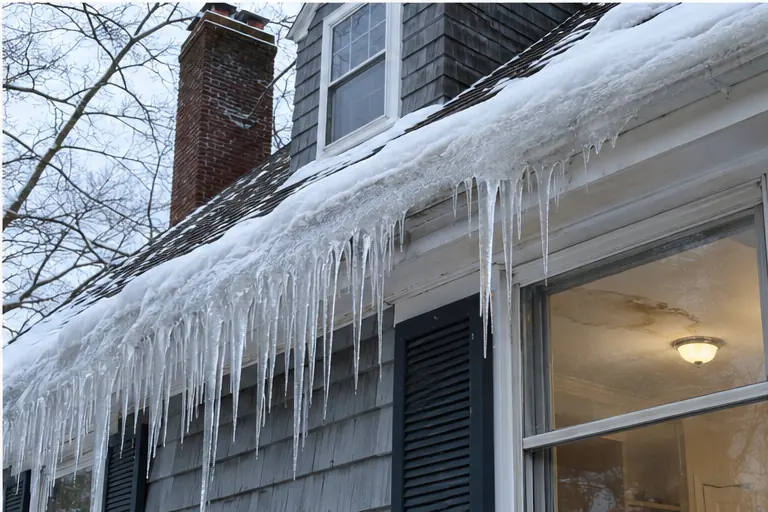
Ice Dam Leak Detection Chicopee Homeowners Call For
Ice dam leak detection in Chicopee locates where melted snow backed up behind ice and got into your ceilings and walls. We map the wet areas, scan for the heat loss that causes the ice, and give you a report covering the leak spots and the insulation or air sealing gaps behind them.
This visit is for owners who see stains at the eaves, damp exterior walls or drips in a winter thaw. When you call, we ask where the water shows and how long the ice has been there, quote a range and book the soonest time on a cold day.
What Ice Dam Leak Detection Includes in Chicopee
Ice dam leaks have two parts, the water that gets in and the heat that built the ice. The visit looks at both, so the report points to the wet spots and to the gaps that cause the problem each year. Fixing only the stain means the ice, and the leak, comes back with the next heavy snow.
- Interior moisture map of ceilings and exterior walls, showing exactly where the water has traveled and how wet each area is right now
- Thermal heat loss scan that reveals warm air escaping into the roof, which is where the ice builds along the cold edge of the roof, and shows how bad the problem is house wide
- Attic and knee wall check for wet insulation, stained wood, missing baffles, blocked soffit vents and gaps around chimneys, recessed lights and wiring
- Written report with the leak spots, the causes behind them and a ranked list of fixes, ready for an insurer, a roofer or an insulation contractor, so each one sees the same facts
Why Ice Dams Are So Common on Chicopee Capes
Cape style homes are built in a way that invites ice dams, and our winters supply the rest. Understanding the cycle makes it easier to see why the same eave leaks every year, even after a repair, and what actually breaks that cycle.
- Knee walls and little attic space: Capes often have knee walls and sloped ceilings with thin insulation, so heat from living space reaches the roof deck easily, and there is little room to add more insulation without planning.
- Warm air leaking into the roof: Gaps around lights, vents and framing let warm air rise into the roof, which warms the shingles above the heated space while the shingles above the eave stay below freezing.
- Snow that melts then refreezes: Meltwater runs down the warm roof and freezes at the cold eave, which hangs past the heated walls, building a ridge of ice that grows with each day of melting and each new storm.
- Heavy snow and freeze and thaw: Snowfall at Westover tops 49 inches in a typical season, and average January highs near 31 F keep the cycle going for weeks at a time, with little relief between storms.
As the ridge grows, meltwater pools under shingles and runs into the walls and ceiling below, where it soaks insulation before a stain even appears.
How We Handle Ice Dam Leak Detection Step by Step
Our visit follows a set order, and one stage needs a cold day, because heat loss only shows clearly when it is cold outside. We schedule around that so the scan gives an honest picture of how your house holds its heat.
- Learn where the water shows: We ask where stains, drips or damp walls appear, when they began and how much snow and ice sit on the roof now, plus any past repairs or insulation work.
- Map the moisture: A moisture meter charts wet ceilings and walls, so we can see how far the water has spread inside the house and which areas are still wet.
- Scan for heat loss: On a cold day, a thermal camera shows warm patches where heat escapes into the roof, which is exactly where ice dams form, and we photograph each patch for the report.
- Check the attic and knee walls: We look for wet or compressed insulation, missing baffles, stained wood and openings around chimneys, vents and light fixtures that let warm air through.
- Write the report: You get photos, readings and a plain list of leak spots, causes and fixes, in the order that will help most, ready to share with a roofer, an insulation contractor or your insurer.
Where Ice Dam Leaks Show Up
Ceilings at the Eaves
Brown stains and drips along the edge of a ceiling are the classic sign that water has backed up under the roof edge, and they often return in the same place every winter. A fresh coat of paint hides the mark but not the cause, and it may trap damp inside the plaster.
Exterior Wall Corners
Water running down inside the wall can soak insulation and paint at corners, showing up as peeling, bubbling or a damp smell, long before a visible drip appears.
Window and Door Heads
Leaks above windows and doors often start at the eave, travel behind trim and appear as stains or drips inside, which makes owners suspect the window instead of the roof.
Knee Wall Closets
Closets behind the short walls of a cape trap damp air, and wet insulation behind them can go unseen for weeks, until a musty smell or stain gives it away.
Porch Roofs
Low slope porch roofs on three deckers collect ice easily and leak where they meet the main wall, since there is little pitch to shed the water. We check the flashing there too, because the joint is often the entry point.
How Much Does Ice Dam Leak Detection Cost in Chicopee?
Ice dam leak work in Chicopee tends to cost roughly $200 to $450, with any repair priced separately once the causes are known. Quoting over the phone is free, and the price we give at the door is the price you pay for the visit.
| Ice dam visit | Typical range |
|---|---|
| One area, moisture map only | About $200 to $275 |
| Moisture map with thermal scan | About $275 to $375 |
| Full attic review and report | About $375 to $450 |
| Holiday or weekend call out | Add about $100 to $250 |
How easily we can reach the attic, how many rooms are affected, the outdoor temperature on the scan day and whether you want a dated report for an insurer can all change the price. We talk through each one before booking, so there are no surprises when the visit ends and you can plan the repair budget with confidence. Insulation or roof work is quoted separately by the contractor you choose, and our report gives each bidder the same facts to price.
How to Prevent Ice Dams in Chicopee
The best way to stop ice dams is to keep the roof cold by stopping warm air leaks and adding insulation. A cold roof lets snow melt slowly from the outside, so ice never builds at the eave. Here is where to start, in the order that usually gives the best result for the money.
- Seal air leaks around lights, vents, attic hatches and wiring from the heated side
- Add insulation in the attic floor and behind knee walls to a safe depth
- Make sure soffit vents stay open so cold air flows under the roof deck
- Clean gutters in autumn so meltwater has a clear path off the roof
- Use a roof rake from the ground to pull snow from the lowest feet of the roof
- Ask about Mass Save insulation and air sealing programs for homeowners
- Keep storage and boxes off vents so air can move through the attic
Recent Ice Dam Leak Detection Jobs Near Chicopee
After a heavy snow, our crew finished ice dam investigations in capes around Sandy Hill and Aldenville, and satisfied owners were pleased to see exactly where heat escaped into the roof, which the images below illustrate.
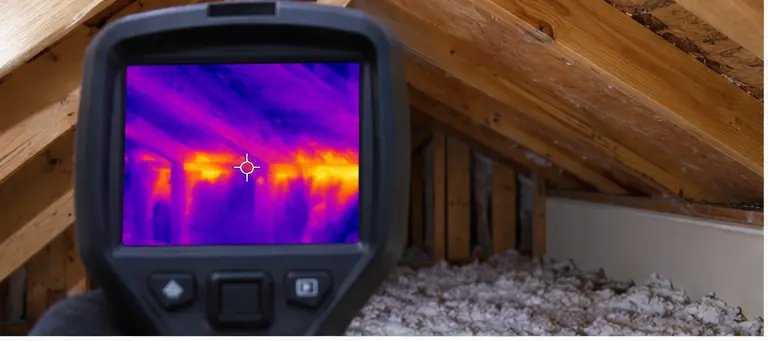
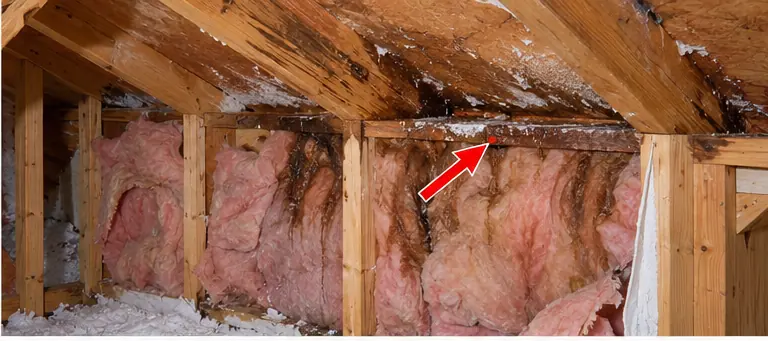
The first shows the heat loss, and the second shows the wet area it caused.
Stay Off Icy Roofs
Ice dams look tempting to remove, but the risks are real. A fall or a damaged roof costs far more than waiting for a trained crew, so keep your feet on the ground and use the safe steps below.
- Do not climb onto a snowy or icy roof
- Do not chip or chop at ice with tools, since it tears shingles
- Use a roof rake from the ground to clear the lowest feet of snow
- Keep people and pets away from walkways under heavy icicles
- Place buckets under drips and protect furniture, rugs and electronics
- Call us to find the leak and a roofer to clear the dam
- Keep gutters and downspouts clear of ice from ground level only
- Turn off power to any room with a wet ceiling light
Related Leak Services in Chicopee
Ice dams often lead to other winter problems, so the services below cover problems that often arrive with them. If one fits your home, it can go on the same appointment and into the same report, which keeps everything in one place.
- Roof leak detection for the rest of the roof, flashing, chimneys and vents
- Frozen pipe checks when a cold snap also hits plumbing in walls, attics and cellars
- Hidden leak detection for stains whose source is not yet clear
- Mold and moisture detection when wet insulation stays damp and begins to smell
Ice Dam Help Across the Valley
We trace ice dam leaks in Sandy Hill, Aldenville and Fairview, where capes with knee walls and low attic space are common. We also work in South Hadley, Granby and Wilbraham for owners dealing with the same eave stains each winter, and the visit is just as thorough at each address.
Across ZIP codes 01013, 01020 and 01022, tell us which rooms show water. We bring the thermal camera and moisture meter needed to find the leak and the heat loss behind it.
Ice Dam Questions Answered
Ice dams raise questions about causes, coverage and testing, and owners often ask them in the middle of a storm. These short answers cover why they form, whether insurance helps and how a thermal camera finds heat loss.
Heat from the house melts snow on the roof. The water runs down and freezes at the cold edge, building a dam. More melt then backs up under shingles and leaks inside.
Many policies cover sudden water damage from ice dams but not the roof itself or repeat issues. Check your policy. Our dated report helps your claim.
Yes. On a cold day the camera shows warm spots where heat escapes into the roof, which is right where ice dams form.
Only for a while. Unless the heat loss is fixed, the ice returns, and the leak returns with it. Clearing the ice helps in the short term, but the report shows what to change so the dam does not form again.
A cold day with snow on the roof shows heat loss best, so we schedule scans for the coldest part of winter. Moisture mapping works any time, so you can book that part right away.