
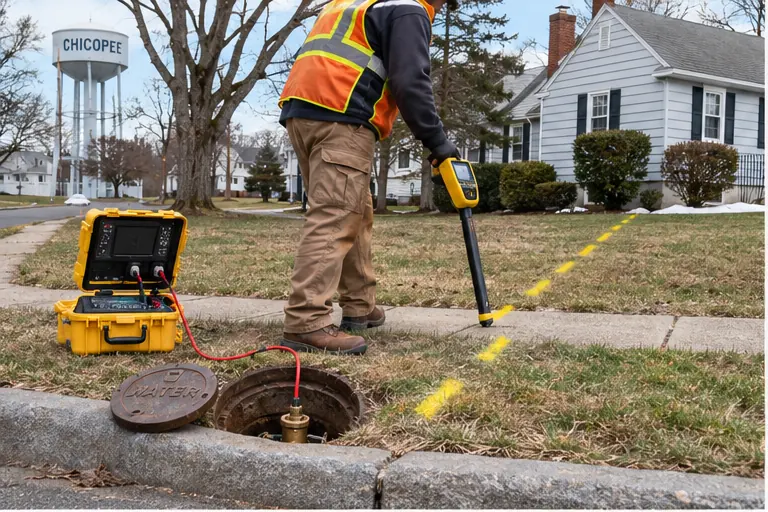
Water Service Line Leak Detection Chicopee Owners Need
Water service line leak detection in Chicopee pinpoints leaks on the pipe that runs from the city curb stop to your home. We locate the line, test it under pressure and listen along its path, then mark the exact spot and tell you which side of the property line it is on.
This helps homeowners with low pressure, wet lawns or a mystery bill, and landlords who need to know who pays. Call us with what you see, and we give you a price range and set a visit, usually after a short talk about where the pipe enters your cellar.
What Service Line Leak Detection Includes in Chicopee
The pipe from the street to your home has several places where it can fail, from the curb to the wall. Our visit checks each segment in order, so the report shows exactly where the water escapes and why.
- Curb stop check and line trace: We find the curb stop, confirm it works and trace the pipe path with a locator, so the whole run from the street is mapped and flagged before any testing begins.
- Pressure test with the curb stop closed: Closing the stop isolates the house plumbing from the street. We then test the buried section on its own, which shows a leak on the pipe and not inside.
- Acoustic and tracer gas pinpointing: A correlator and ground microphone find the sound of escaping water, and tracer gas confirms quiet leaks by showing exactly where the gas rises through the soil above the break.
- Entry wall check and written report: We inspect where the pipe enters the cellar wall, a common weak point, and deliver a report with material and depth notes, along with repair or replacement options.
Signs Your Chicopee Service Line Is Leaking
A buried pipe seldom announces itself, but it usually leaves clues somewhere between the street and your foundation. If you notice any of these, a service line test is a smart next step, well before a small leak grows into a washout.
- The meter keeps moving with every tap and appliance in the house turned off, which points to water escaping somewhere underground
- Water pressure at the taps drops for no reason that you can explain, especially on the first floor or at the kitchen sink
- A neighbor or the city mentions wet pavement or a puddle near the curb that never seems to dry
- A green, soggy or unusually soft strip appears in the lawn on the path between the street and the house
- Water seeps in or stains the wall where the pipe enters the cellar, even during dry weather
- Your water bill jumps, though your habits have not changed at all
- You hear a faint hiss or rushing sound near the meter when the house is quiet at night
- A sunken patch, small sinkhole or heaved pavement shows over the pipe route
- Snow melts early along a line across the yard, thanks to a warm leak underneath
How We Handle Service Line Leak Detection Step by Step
Five steps move from the meter to the exact break. Each one answers a simple question, and together the answers tell you where the leak is, who is responsible and what the repair is likely to involve for your yard.
- Start with the meter: We confirm that the meter moves with every fixture off, which tells us that water is leaving the house plumbing or the buried pipe somewhere before it reaches a tap.
- Close the curb stop and test: The city may need to operate the stop, so we coordinate that, then test the buried section alone under pressure and watch whether it holds.
- Trace the line: Starting at the curb box, a locator follows the buried pipe toward your foundation and flags the route across the yard, so nobody digs in the wrong place.
- Pinpoint the break: Acoustic listening and tracer gas, where needed, narrow the leak to a spot a few feet wide, even under grass, soil or a paved driveway.
- Mark and report: We flag the dig spot, photograph it and record what we found, covering how deep the pipe sits, what it is made of and which fixes are realistic.
Service Line Materials We See in Chicopee
The pipe material shapes how and where a service line leaks. We note it in every report, because it also affects whether a spot repair makes sense or the whole line should be replaced before the next failure.
| Material | Where we see it | How it tends to leak |
|---|---|---|
| Copper | Homes from the 1950s to today | Pinholes and fitting leaks |
| Galvanized steel | Older homes, often with rust inside | Rust through, leaks at threads |
| Lead | Some lines before 1950, per the city inventory | Cracks and joint failure |
| Plastic | Newer lines and repairs | Fitting and connection leaks |
Because the city is building a lead service line inventory, your report helps document what sits on your property. That is useful when you plan a replacement or talk with the Water Department about your line.
If we see lead or galvanized pipe at the cellar wall, we say so plainly and explain what it may mean for a repair. Photos of the pipe where it enters the house go into your report as a record.
How Much Does Service Line Leak Detection Cost in Chicopee?
Locating a leaking service line here is typically priced between $250 and $650, and any digging or repair is quoted after the spot is marked. Quoting by phone is free, and the on site figure is shared before we start.
| Service line situation | Typical range |
|---|---|
| Short line, simple trace and test | About $250 to $400 |
| Long or deep line, acoustic pinpoint | About $350 to $550 |
| Quiet leak needing tracer gas | About $450 to $650 |
| Late night or holiday visit | Add about $100 to $250 |
Line length, depth, the surface above the pipe and whether the city must operate the curb stop all move the figure. We go over each factor in advance, so you can compare the cost of a spot repair with a full replacement.
Finding the break first keeps the dig small, which is usually where the savings are. A marked spot also lets a plumber or excavator quote the repair without guessing at the length of pipe involved, depth of the trench or how much of the lawn, walk or driveway has to come up.
Recent Service Line Leak Detection Jobs Near Chicopee
We recently completed service line traces in the older streets of Chicopee Center and Willimansett, and the owners were pleased to learn exactly where their leak sat and who was responsible for it. Photos from recent work are below.
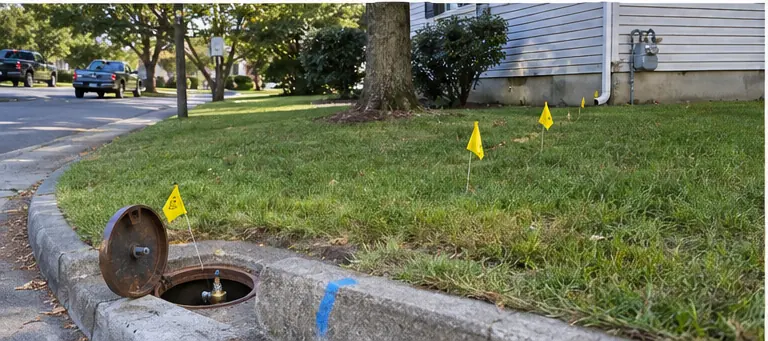
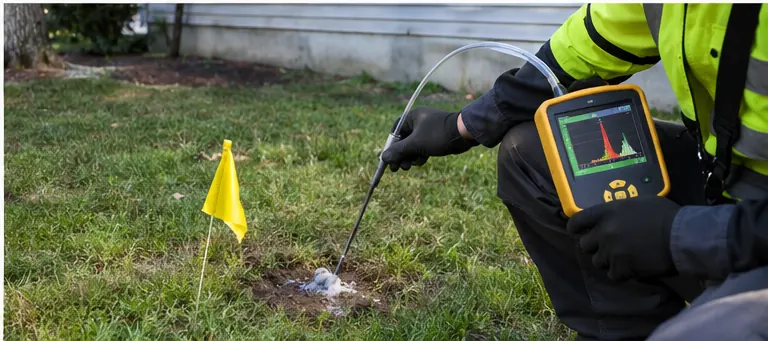
Each photo shows the trace path and the final mark on the lawn.
Working With the City on Your Line
Part of the pipe belongs to you and part belongs to the city, and the boundary matters for repairs. Here is who to contact and what to keep in mind before anyone breaks ground.
- Curb stop operation: The Water Department may need to operate the curb stop, so call them and ask how to arrange it when we plan the test.
- Dig Safe: Before anyone digs, a Dig Safe call has the buried gas, electric and water utilities marked, and we help you schedule that.
- Permits for line work: Ask the city what permits apply before a service line is repaired or replaced, since requirements depend on the job.
- Water off until repaired: If the leak is large, keep the main shut and avoid running the supply until the pipe is fixed.
Related Leak Services in Chicopee
A service line problem usually travels with other symptoms, from high bills to leaks inside. If one of these also fits your situation, we can handle it in the same visit and give you a single clear report to keep.
- All underground line services, including yard lines, spigots and long runs from the street
- High water bill checks that start at the meter and end at the toilet or boiler
- Pipe leaks inside the house, behind walls and under cellar ceilings
- Hidden leak checks for stains, damp spots and sounds you cannot place
Know Which Side of the Line You Own
Responsibility for a leaking line is often the first question, and the answer can change who pays. A clear test and a marked spot give you the facts, so a discussion with the city or a neighbor starts from evidence and not from guesses.
We trace lines for owners in Chicopee Center, Willimansett and Chicopee Falls, and for homes across the line in Springfield, West Springfield and Agawam. Tell us what you notice at the meter, and we bring the locator and the experience to find the exact break.
Service Line Questions Answered
The line from the street raises questions about cost and responsibility. These short answers cover how to spot a leak, who pays and when to repair or replace.
Turn off every tap and check the meter. If it still moves and you see no leak inside, the service line is a top suspect, especially with low pressure or a wet strip in the yard.
Yes. We test with the curb stop closed and mark the leak location, so the report shows whether it is on your side or near the city’s equipment.
One leak on a newer copper line is often a spot repair. Old galvanized or lead lines usually make sense to replace, and we give both prices.
It can wash out soil, soften the lawn and undermine paving. Finding it early keeps the damage small and the dig limited to one spot.
Someone over 18 should be there to give access to the cellar and the meter. The rest of the work happens outside.